137 Pillars House
On a building that held the treaty that opened Northern Thailand's forests, and what the family who restored it chose to say about that.
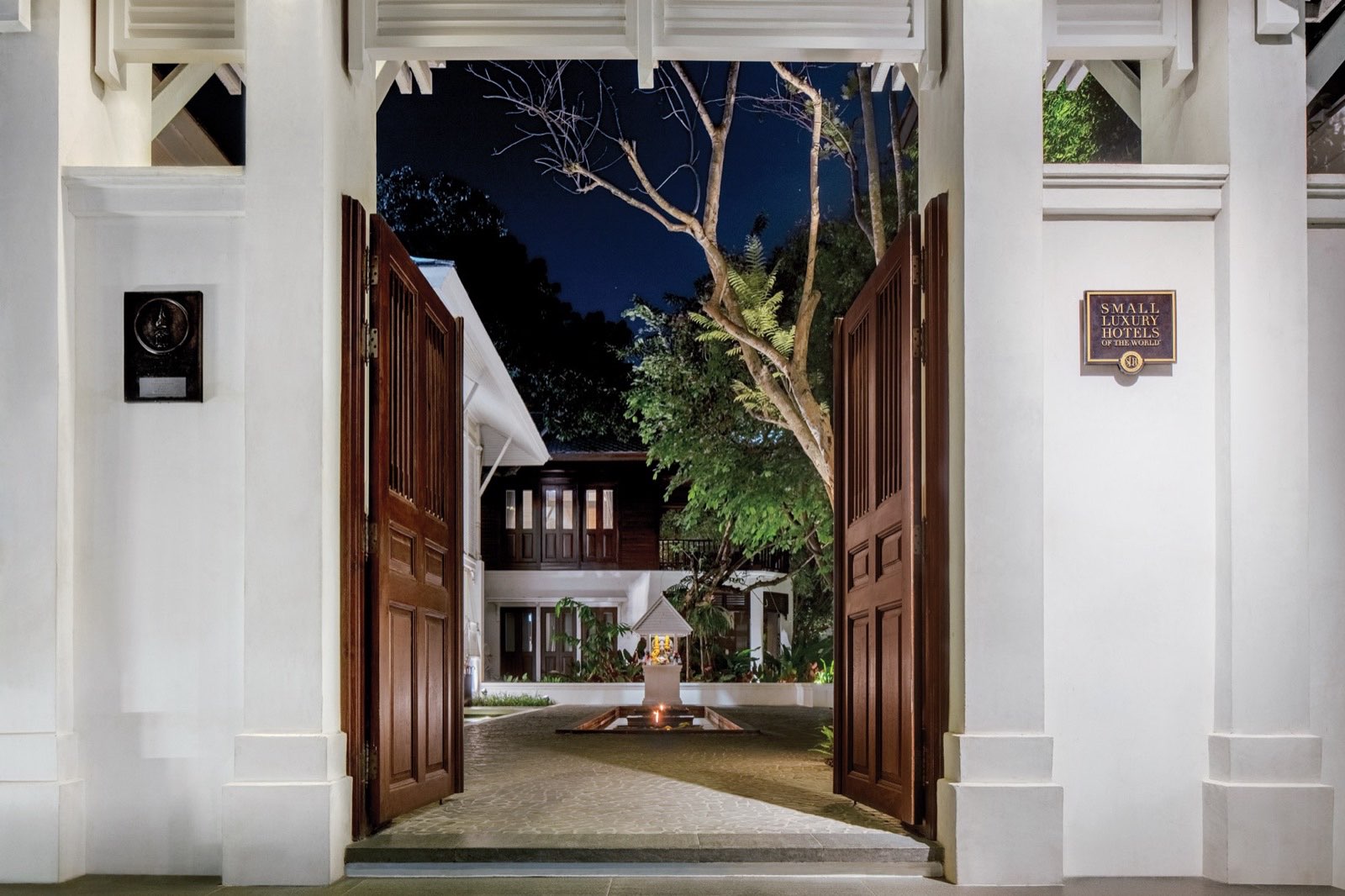
On Nawatgate Road in Chiang Mai's Wat Gate district, there is a whitewashed wall with a gate in it. Nothing on the street side of that wall tells you what lies behind it. No signage. No indication of scale. The wall is simply there, as walls are, doing the particular work that walls do when what they protect is worth protecting.
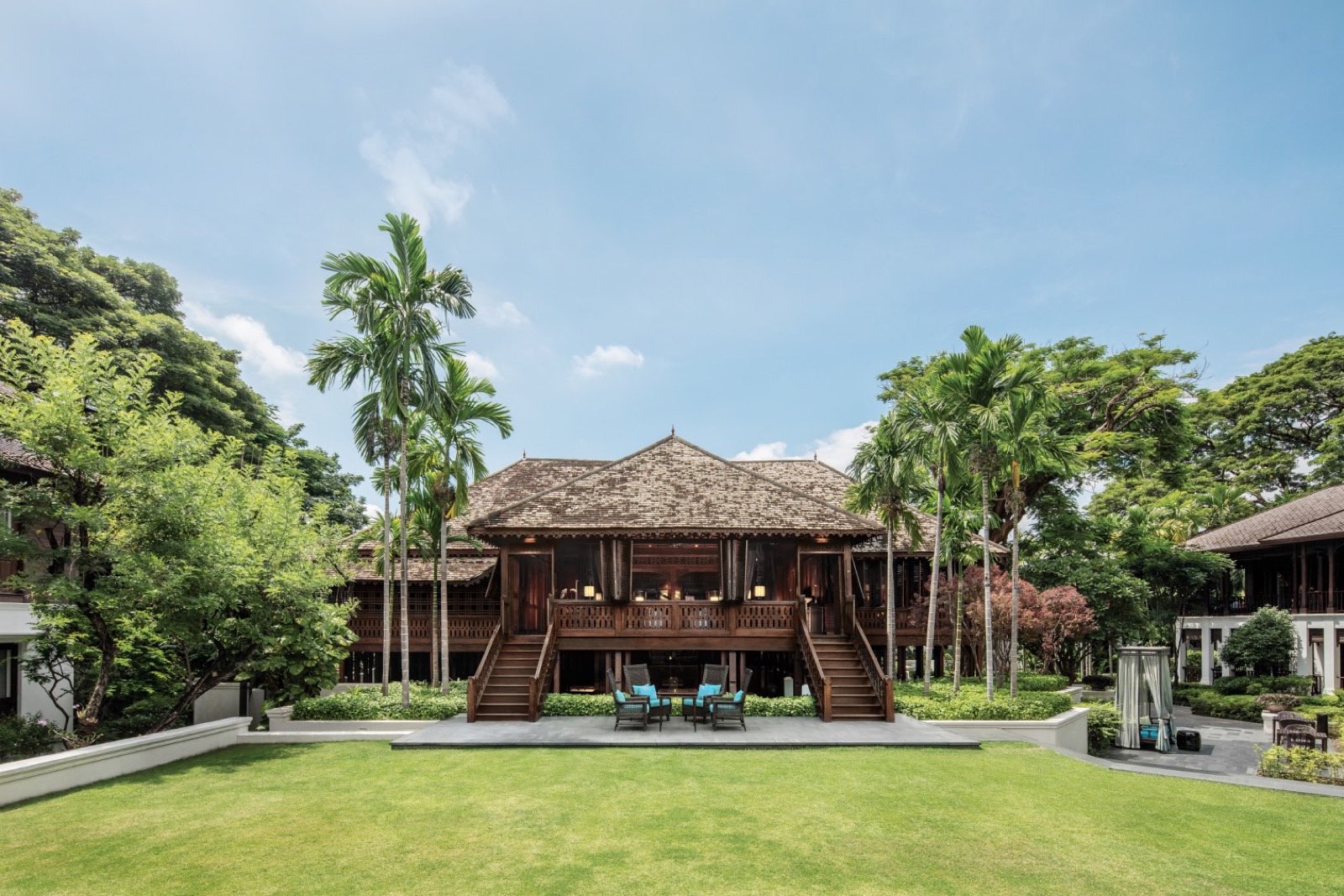
Behind it, a teak house stands on 137 pillars hammered into the ground. It was built in the late nineteenth century as the headquarters of the Borneo Company Limited, the British trading firm that held concessions to log teak across the vast forests of Northern Thailand. The treaty that opened those forests to extraction was signed in this building. The treaty is gone. The building remains, and it is now a hotel.
Over the fifty years that followed that treaty, approximately one million teak trees were removed from Northern Thailand. This is the story of what the building that housed the company that took them has chosen to do with that history.
what the building opened
In 1862, the Borneo Company made an introduction that would shape the forests of Northern Thailand for the next century. King Mongkut of Siam wanted an English tutor for his children. The Company found him one: Anna Leonowens, described in the property's own historical record as born in Caernarvon, Wales. Anna taught the king's children for five years and left the kingdom in 1867. Her student Prince Chulalongkorn ascended the throne the following year. Thirteen years passed. Then, in 1881, King Chulalongkorn invited Anna's son Louis to join his Royal Cavalry as a Captain. Louis was twenty-seven. Two years later, in 1883, the king signed the Treaty of Chiang Mai, permitting the Borneo Company to harvest teak across the forests of Northern Thailand. The friendship Anna had built inside the royal court had opened a kingdom's forests to her son's employer. Louis left the cavalry and joined the Company.
Louis opened the Borneo Company's office along the Ping River on January 24, 1896. Three sprawling teak houses, each with more than 100 pillars, stood on the site. The building now known as 137 Pillars House originally stood on the west side of the river but was moved by Louis to the Company's land in the foreigners' enclave on the eastern bank, where he briefly lived. By royal decree, foreigners lived on the opposite bank from the Thai people. The river divided two worlds. The Company's headquarters occupied the foreign one.
Louis Leonowens was eventually sacked by the Borneo Company in December 1896, accused of improper business dealings. His colleagues described him as impossible to deal with though otherwise completely likeable. He founded his own trading company in response. That company still operates in Thailand today. The suite named after him is available to book.
what it cost
At the peak of the teak trade, as many as 600 elephants worked for the Borneo Company specifically, hauling then piling logs onto rafts bound for Bangkok along the Ping River. Across the industry at its height, 2,500 elephants moved teak through the forests of Northern Thailand. At the start of the twentieth century there were over 100,000 elephants in Thailand. Today there are between 3,000 and 4,000. The 1989 logging ban that was meant to save the forests left the domesticated elephants suddenly without work or purpose. Many ended up begging on the streets of Bangkok.
The property's own coffee table book, published in 2011, the year before 137 Pillars House opened, acknowledges this directly. It states that while the modern traveller may find serious discomfort in the destruction of vast tracts of virgin forest and the conscription of animals to accomplish the most arduous labour, in its time these were not only acceptable but welcomed in the name of progress. That acknowledgment has been present in the property's founding document since the beginning. It was not added in response to criticism. It was written in at the start.
This statement, placed in the Elephant Nature Park partnership booklet in every guest suite from 2021, draws directly from language the property had already committed to in print a decade earlier. The decision to name what this building was used for was not incidental. It was structural, and it was early.
what happened here
William Bain was a Scotsman born in Edinburgh, educated at Harrow, who arrived in Chiang Mai at twenty-one in 1903, reportedly to escape his family's expectations. He joined the Borneo Company as a forestry assistant, rose to Managing Director, married a local Mon woman, and raised four children in Chiang Mai. Upon the deaths of his brothers, he inherited considerable wealth from his family's estate in Britain. He first used it to buy the Bombay Burma Trading Corporation's compound in 1935, selling it back four years later at a handsome profit. He then used that money to purchase the Borneo Company's own thirty-acre compound, reputedly for 20,000 Thai Baht.
In December 1941, the Japanese commandeered all Borneo Company assets in Chiang Mai. Other staff escaped to Burma on foot. William Bain and his colleague David Fleming Macfie were arrested and transported to Bangkok, where they were imprisoned for the duration of the war. Jack Bain, William's son, spent the war years on a tobacco plantation in Chiang Rai, returning home to find that his mother had died, they say from a broken heart following his father's imprisonment. When William was freed by British troops from his Bangkok prison camp, he resumed his position with the Company. The family moved back into the house, which had been looted of William Bain's collection of Buddha statues, bronze drums, and household possessions.
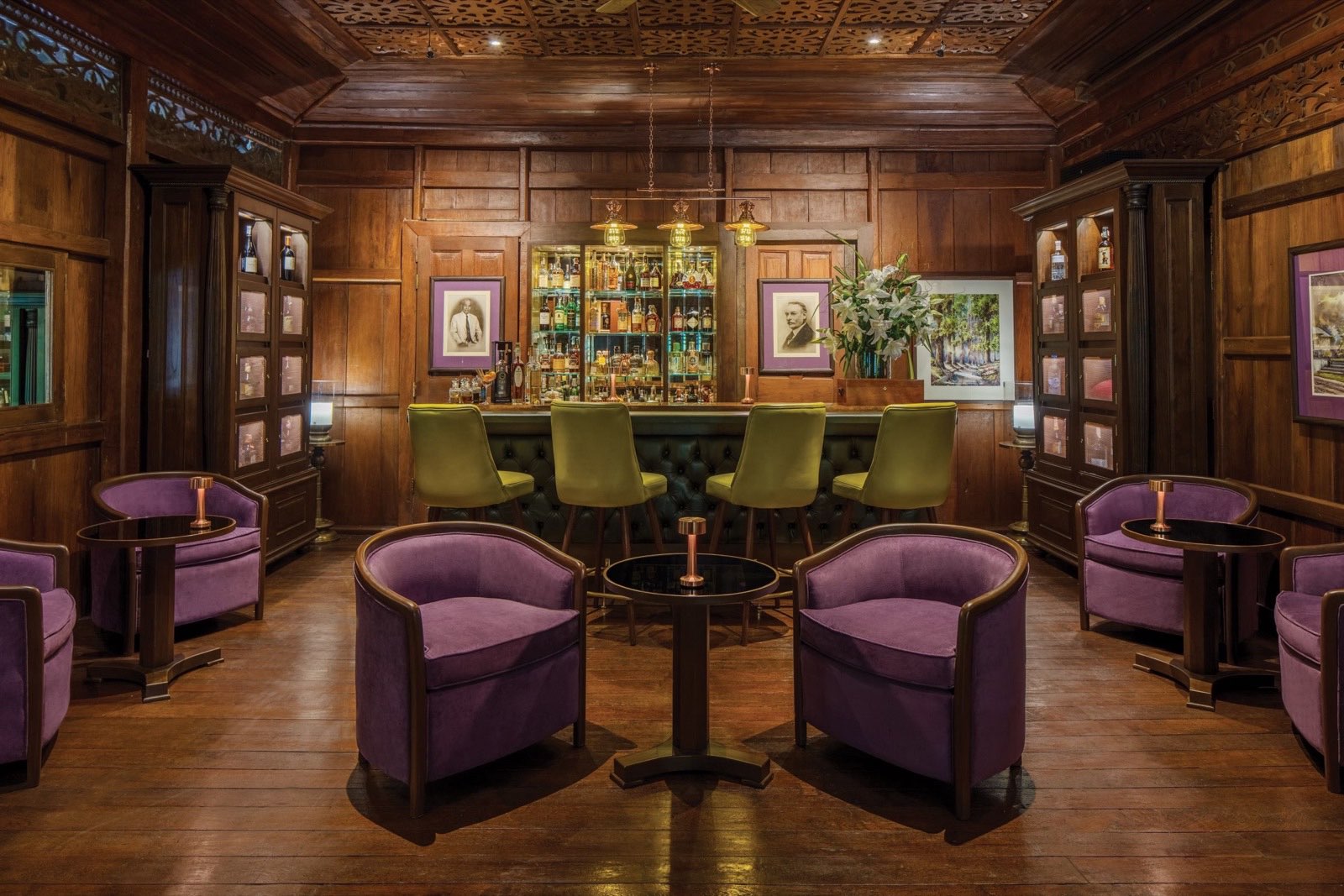
Jack Bain later counted the house's pillars and named it using a Lanna tradition: the number of pillars a house stood on was a measure of its owner's wealth. He counted 137. The name was Jack Bain's gift to the building: a Thai naming tradition applied to a British colonial structure by the son of a Scottish-Mon marriage. In 2001, Jack used his own funds to organise thousands of historical items into a museum at the nearby Wat Gate Khar Rham Temple, which he learned was about to close. Display cabinets were built from leftover wooden coffin doors donated by the temple. Jack Bain's photograph hangs behind the bar at 137 Pillars House alongside Louis Leonowens. The suite named after David Fleming Macfie, the man imprisoned with William Bain in Bangkok, is available to book.
In 1898, Louis Leonowens was one of fourteen founding members of the Chiengmai Gymkhana Club, on forty acres of riverfront parkland three hundred metres from the front gate of this compound: thirteen British teak wallahs, Louis among them, and one Thai member. Their stated mission was the encouragement of sport in Northern Siam. There was horse racing, polo, golf, cricket, and an activity called Bumble Puppy whose rules have since been lost. Somerset Maugham sat in the Club in the 1920s and wrote that it was the one place in Siam where the world had not entirely changed. The Gymkhana Club still operates. Thailand's oldest sporting club, it remains open to men and women of all nationalities.
what was found
By the early 2000s the house was derelict. The tropical climate had done what it does to untended wood. The teak had darkened to near black from decades of linseed oil weathering. Locals called it Baan Dam, the Black House, and were afraid to approach it.
Panida Wongphanlert was a Harvard-trained architect from Bangkok who came to Chiang Mai in 2002, looking initially for a single, simple row house in which to retire. On the first day, an estate agent drove her around the city and stopped without warning at a piece of overgrown land. In Panida's own words: "My eyes focused through the big old trees on a black wooden house. That house was the most outstanding house I ever seen. I began to walk towards it but before I could step on the land, the broker said no. She would have to ask for the owner first."
The Black House kept coming back to her mind. When she returned, the land seemed too overgrown and too big for a small vacation home. The owner came out from the crumbling house on stilts and they talked. The property had been for sale for a year. People seemed afraid of it. In Panida's words: "Instead we were charmed but concerned out of respect to the kingdom about buying what looked to us like a Thai royal house. As we researched, we learned the true, fascinating story of this house and the British Borneo Company and we knew our family could share this slice of Thai history with the world."
She and her siblings purchased the compound from Jack Bain's eldest daughter in 2005. The restoration took four years. Professor Julaporn Natapanich, an architect and specialist in heritage restoration at Chiang Mai University, conducted extensive research into the building's original history, the local community, and the Lanna and Colonial design traditions before beginning. Eighty percent of the original material was retained. The house was physically lifted from six feet to fifteen and a half feet above the ground, its 137 pillars reinforced with metal to support the raise. The extra space created beneath became the Borneo Legacy Room.
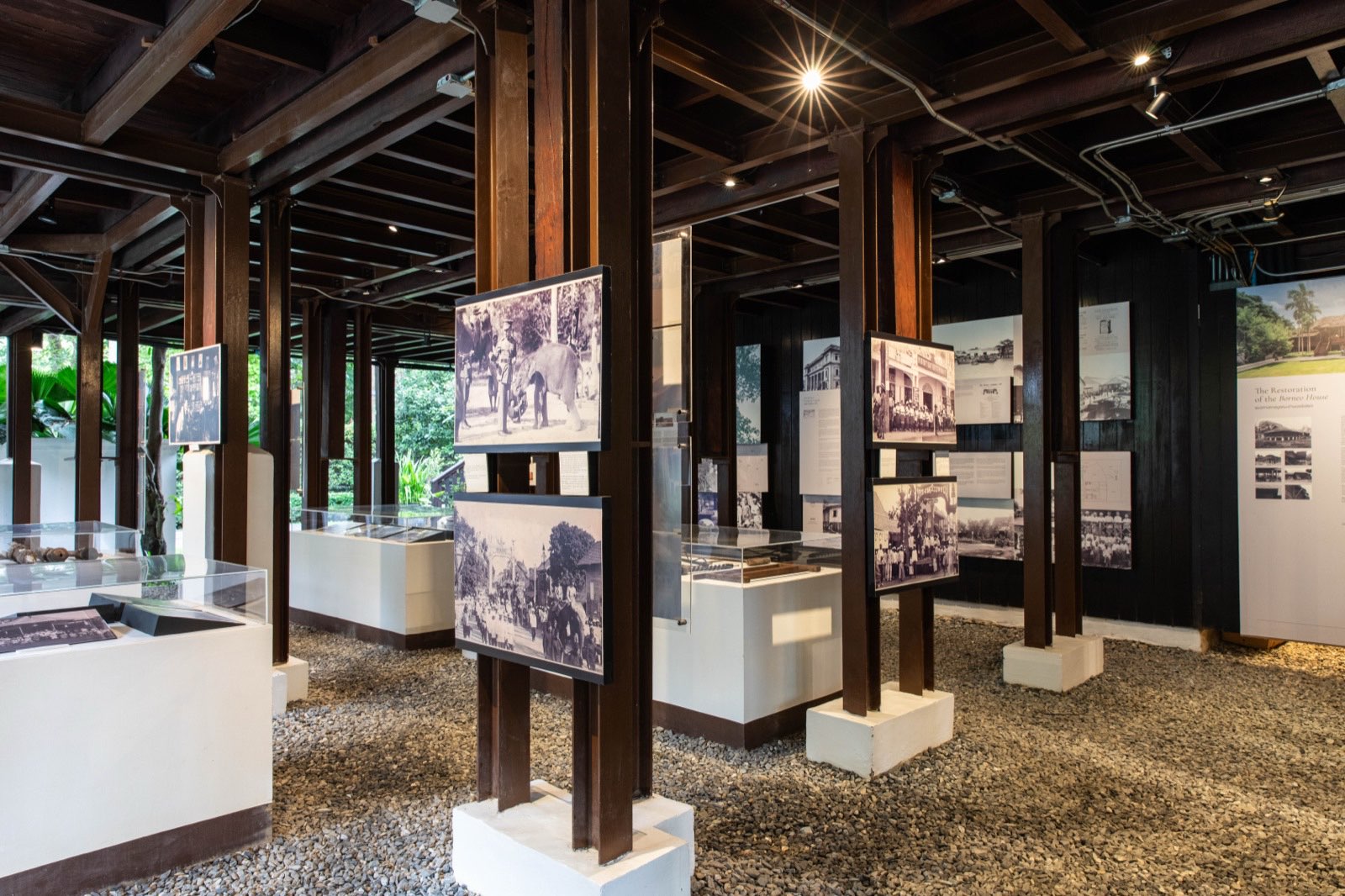
The Borneo Legacy Room did not open until December 2023, nearly two decades after the restoration began. The historical research that shaped its narrative was led by Graham Jefcoate, working alongside Dennis Owen and Anne Arrowsmith. Beneath the raised teak house, between the original pillars, glass display cases hold period tools from the teak trade, archival photographs, documents, and artefacts recovered from the building's original occupants. Interpretive panels tell the history of the Borneo Company, the teak wallahs, and the building itself in both English and Thai. Watercolour paintings of the Black House as it appeared before restoration hang on the original teak columns. A building that had to be raised to survive created, in the act of being saved, the room to remember what it was.
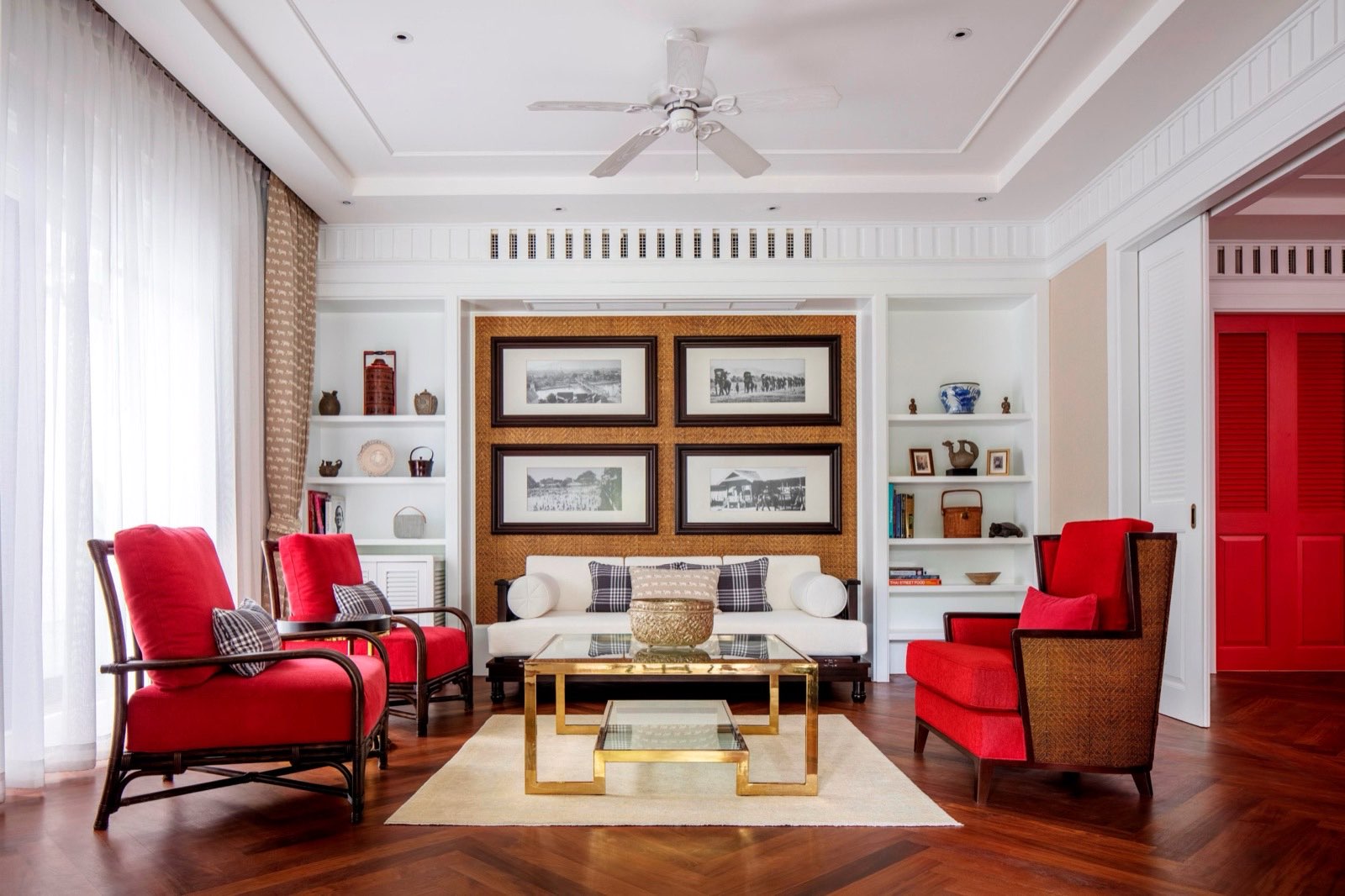
Interior design was by P49Deesign, Bangkok. The suites carry a quiet echo of Pierre Jeanneret's mid-century modernism: Jeanneret was the Swiss architect who designed the furniture for Chandigarh, India's planned city, in the 1950s, producing pieces that were democratic, material-honest, and built to last. The same qualities are present here, warmed by local teak and stone. Jim Thompson's handwoven Thai silk runs through the rooms. Thompson was the American businessman who revived the Thai silk industry after World War II and disappeared without explanation in the Malaysian jungle in 1967. His silk remains among the finest produced in Thailand. Historical photographs hang in every space, including the bathrooms. The history of the building does not stop at the bedroom door. The landscape was designed to restore the trees abandoned alongside the building. Those trees are at least as old as the house itself. Every night, a small story is left in each room alongside the turndown. Deliberately light. A hotel that holds its history so fully during the day that it earned the right to offer something simple before sleep.
what it holds now
The building that housed the company that put 600 elephants to work in the forests of Northern Thailand has spent five years raising money to rescue them. The Elephant Nature Park partnership, launched on World Elephant Day in August 2021 and running until early 2026, raised approximately THB 1.9 million for elephant welfare and conservation. Following that partnership, 137 Pillars House moved to a new partner: Patara Elephant Conservation, an organisation with more than twenty years of experience in elephant rescue, rehabilitation, veterinary healthcare, conservation, and education. The move, in the words of the property, was a decision to broaden the reach of their conservation initiatives by supporting an organisation with a complementary approach to elephant welfare. Many of the elephants under Patara's care have been rescued from unsuitable conditions and receive comprehensive health assessments, rehabilitation programmes, and lifelong individualised care supported by one of Thailand's most experienced elephant veterinary teams. Over the past fifteen years, 45 calves have been born to rescued mothers under Patara's care. Today more than 85 elephants live in stable family groups, with the organisation also supporting the reintroduction of elephants into protected natural habitats. The building that once employed elephants to move teak is now supporting the recovery of the species those elephants belonged to.
Nida Wongphanlert, Panida's niece and the brand's Managing Director, holds degrees in Mechanical Engineering from the University of Bristol and the University of Cambridge. She joined the family business in 2015. Her father, Khun Niphan, one of the siblings who helped Panida acquire the compound, has a large plot of land in Photharam province, his hometown. He has established a personal reforestation initiative there, a carbon offset programme covering both the hotel and his textile businesses. Whether or not the connection to the forests the Borneo Company stripped is conscious, it is present. The family that restored the teak trading company's headquarters is planting trees.
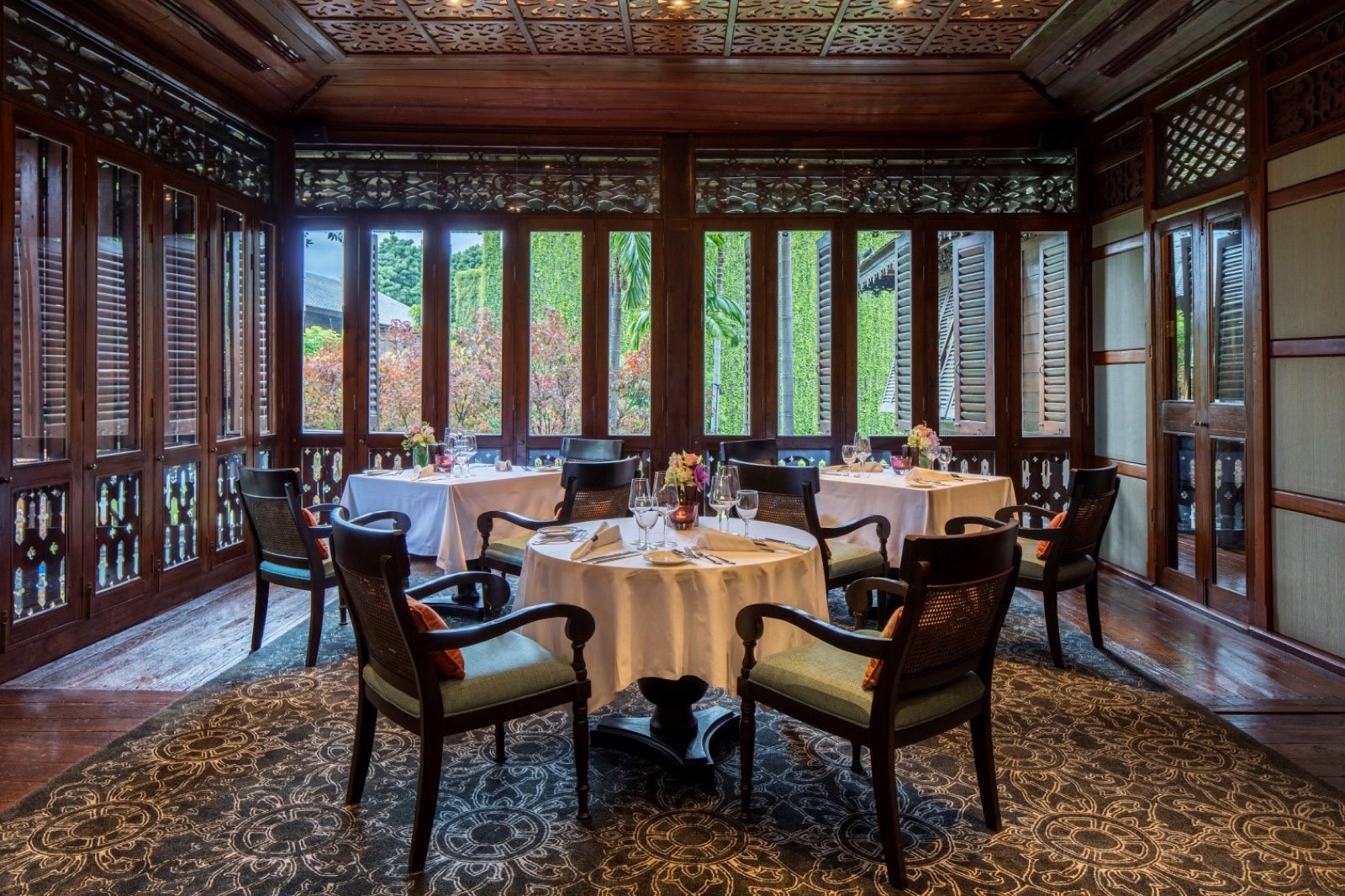
Palette, the property's dinner restaurant, occupies the original teak homestead itself. Its menu blends Western and Asian cuisine, served for lunch and dinner beneath a rotating selection of artwork by local artists.
When asked what she wants guests to understand about 137 Pillars House that most currently leave without knowing, Nida Wongphanlert said this:
what it asks
The Lanna tradition that Jack Bain used to name this building counted pillars as a measure of wealth. He counted 137 and gave the house its name. A colonial building, named by the son of a Scottish-Mon marriage, using the counting tradition of the kingdom whose capital the building occupies. That detail, which most accounts mention in passing, is the key to what 137 Pillars House has always been: a place where the colonial and the local have coexisted without resolution, where the weight of what happened here is held in the structure rather than announced in the brochure.
The question 137 Pillars House asks by existing is not whether its history should make anyone comfortable. It should not, entirely. The question is what it means to restore something honestly: to hold the full weight of what a place was, write it into the founding document, build a museum beneath it, name the suites after the men who were imprisoned because of it, and then ask what the place can be to the people who come to it now.
The acknowledgment embedded in the coffee table book does not resolve that question. The Borneo Legacy Room does not resolve it. They open it. Which is the more honest thing to do.
Behind the whitewashed wall on Nawatgate Road, a teak house stands on 137 pillars. It has been standing, in one form or another, for over a century. The Borneo Company that built the wealth behind its walls is long gone. The forests it stripped have not fully recovered. The building remains. Still being written, as Nida says. It is worth knowing what it has been standing through.